
Recorded March 14 & 15, 2026; published Tuesday March 31, 2026
Program Notes:
(Greyed-out pieces do not currently appear in our playlist. We will work to add them if licensing permission is granted.)
For This Joy ………………..arr. Susan LaBarr (b. 1981)
Brian Kim, clarinet
Charles Anthony Silvestri (b. 1965) is one of the most popular poets of the last two decades, with his texts appearing in dozens of American choral pieces. In her piece, “For This Joy,” Susan LaBarr (b. 1981) chose to pair Silvestri’s text with the seventeenth-century anonymous German hymn tune LOBE DEN HERREN. The first two verses praise the natural world in awe and celebration, and LaBarr wisely chose to let the beautiful tune and text shine with modest adornment. However, in the third verse, the tone shifts to a bittersweet quality: “Our tender hearts, which so wondrously in chambers deeping, Cherish the joys of new love and, at death’s call, the weeping.” For this third verse, LaBarr’s arrangement masterfully combines all voices together in a tight harmony and a slower tempo and softer dynamic. The result is an incredibly dynamic piece that captures the full gamut of what it means to be human: “sorrow and pain turn to rejoicing again.”
Gonna Get Through This World ……………………..Lisa Gutkin (b. 1959), arr. Nick Page
Brian Kim, clarinet
The Klezmatics is an American klezmer group based in New York who have shared Yiddish, Aramaic, and Bavarian tunes with audiences worldwide. Lisa Gutkin (b. 1959) is a violinist, singer, and songwriter for the group, and has co-authored songs with Woody Guthrie including, “Gonna Get Through This World,” which is representative of Guthrie’s political and social views. Nick Page captures the klezmer feeling with the offbeat piano accompaniment and bluesy clarinet solo, and the result is a joyous affirmation of an optimistic worldview.
Naalah (Cry of Grief) ………………………Joshua Shank (b. 1980)
Juliana Zheng, oboe
Joshua Shank’s (b. 1980) “Naalah (Cry of Grief)” utilizes text from poet Mirza Ghalib (1797-1869). Sung in the original Urdu, the piece captures many elements of Indian music, including a low drone, melodic scales with flat seconds, and the reedy sound of the oboe. About his piece, Shank writes, “People suffered from the experience of having their heart profoundly broken just as much now as when Ghalib first wrote these texts almost 150 years ago. Luckily, we all wish to be healed at some point and, ultimately, have the ability and opportunity to do so of our own accord every time we are faced with adversity of any kind; it’s simply a matter of calling on it. The end of the piece (which is actually the first stanza of the final poem) is meant to be this invocation.”
“No Mark” and “Wood” from Four Pastorales ………………Cecil Effinger (1914-1990)
Juliana Zheng, oboe
Cecil Effinger (1914-1990) was an American composer, oboist, and Army Band conductor born in Colorado Springs, and his Four Pastorales for choir and oboe are among some of his most widely performed pieces. Effinger’s four settings all utilize poetry by Thomas Hornsby Ferril (1896-1988) that were written during the Second World War. Though both poems have a dark beginning, they conclude evoking a sense of wonder. “No Mark” describes how nature beautifully reclaims ground – even gravesites – where human tragedy occurred. However, for the World War Two pilot that crashes into the ocean, no mark is left behind but the beautiful evening star. In “Wood,” the narrator describes a place of darkness and death, though he is wondrously transformed after an encounter. Effinger’s use of choral unison singing – with no harmony – is effective at creating an austere or mysterious tone, especially when juxtaposed with the oboe. In contrast, he reserves occasional major chords – so common in most other tonal music – for rare moments of beauty and resolution.
1. "No Mark"
Corn grew where the corn was spilled
In the wreck where Casey Jones was killed,
Scrub-oak grows and sassafras
Around the shady stone you pass
To show where Stonewall Jackson fell
That Saturday at Chancellorsville,
And soapweed bayonets are steeled
Across the Custer battlefield;
But where you die the sky is black
A little while with cracking flak
Then ocean closes very still
Above your skull that held our will
O swing away, white gull, white gull;
Evening star, be beautiful.
4. "Wood"
There was a dark and awful wood
Where increments of death accrued
To every leaf and antlered head
Until it withered and was dead,
And lonely there I wandered
And wandered and wandered.
But once a myth-white moon shone there
And you were kneeling by a flow’r,
And it was practical and wise
For me to kneel and you to rise,
And me to rise and turn to go,
And you to turn and whisper no,
And seven wondrous stags that I
Could not believe walked slowly by!

—Thomas Hornsby Ferril
The Sun Never Says ……………… Dan Forrest (b. 1978)
Chris Jin, cello
Dan Forrest’s (b. 1978) “The Sun Never Says” sets a text by American poet Daniel Ladinsky (b.1948). Using the sun and earth as a metaphor, the poem illustrates the amazing effect of unconditional love. For the second half of the poem, (“Look what happens with a love like that, it lights the whole sky”) Forrest crafts beautiful wave after wave of increasingly expansive harmonies. The cello likely represents the sun, and the choral writing cleverly depicts blossoming, as the individual lines unfold one after the other. During the Covid-19 quarantine, the Bellevue Chamber Chorus virtually recorded this piece, and the accompanying video highlights these gifts of new life that the sun gives to the earth. Find it on youtube.com.
O Love ……………… Elaine Hagenberg (b. 1979)
Chris Jin, cello
Elaine Hagenberg writes about her piece “O Love,” saying, “It was inspired by the words of Scottish minister, George Matheson in 1882. When he was blinded at the age of nineteen, his fiancee called off their engagement and his sister cared for him as he endured new challenges. Years later, on the eve of his sister’s wedding, he faced the painful reminder of his own heartache and loss as he penned the words to this hymn. Given a fresh melody, this setting for choir and cello uses hopeful ascending lines representing renewed faith. Though lingering dissonances remind us of past heartache, the beautiful promise remains: “morn shall tearless be.”
O Love that will not let me go,
I rest my weary soul in thee;
I give thee back the life I owe,
That in thy ocean depths its flow
May richer, fuller be.
O Joy that seeks me through pain,
I cannot close my heart to thee;
I trace the rainbow through the rain,
And feel the promise is not vain,
That morn shall tearless be.

—George Matheson
Hands Are Knockin’ ……………… Kyle Pederson (b. 1971)
Von Sandeno, percussion
Kyle Pederson crafted the music and text to “Hands Are Knockin‘,’” and about his piece he writes, “it was born from a collaborative effort with the Kindred Chamber Choir and their director, Melanie Brink, and staff members of the The American International School of Muscat (TAISM). The piece was commissioned to celebrate the 20th anniversary of the school’s opening, and was premiered at the 16th annual TAISM Festival of Choirs in the Sultanate of Oman. Because the school and festival are nestled in the heart of the Middle East in Oman, where Arabic is the official language, it seemed appropriate to incorporate several beautiful Arabic phrases throughout. Alhamdulillah is a very common expression in Arabic and, like alleluia, used frequently to verbalize joy or gratitude in many situations. The juxtaposition of English and Arabic text throughout the piece is intended to reinforce the universality of the message—an invitation to all to open our minds, hearts and hands to each other.”
Naftahhu athhanana, Alhamdulillah.
Naftahhu qulubana, Alhamdulillah.
Namuddu aydeeyana, Alhamdulillah.

Hands are knockin’
Brother, will you let them in?
Sister, will you let them in?
We open our minds, thanks to God.
We open our hearts, thanks to God.
We reach out our hands, thanks to God.

—Kyle Pederson
‘Tis The Last Rose of Summer ………………Richard Milliken (1767-1815), arr. David Lantz
Calvin Chang, violin
Imran Goychayev, assistant conductor
“’Tis the Last Rose of Summer” is a poem by Irishman Thomas Moore (1779-1852). Allegedly the poem is about a Rosa ‘Old Blush,’ which is thought to be the first East Asian rose to reach Europe. The anonymous tune was well-known in Moore’s time and was often paired with other texts supporting the same syllable count; however, today this text and tune are inseparable. The poem illustrates loneliness, loss, and the fleeting nature of life. Nevertheless, given the lively violin line and buoyant piano accompaniment, arranger David Lantz seems to choose a more optimistic reading: “seize the day” rather than wallow in mortality.
‘Tis the last rose of summer,
Left blooming alone;
All her lovely companions
Are faded and gone;
No flower of her kindred,
No rose-bud is nigh,
To reflect back her blushes
Or give sigh for sigh!

I’ll not leave thee, thou lone one.
To pine on the stem;
Since the lovely are sleeping,
Go, sleep thou with them;
Thus kindly I scatter
Thy leaves o’er the bed,
Where thy mates of the garden
Lie scentless and dead.
So soon may I follow,
When friendships decay,
And from love’s shining circle
The gems drop away!
When true hearts lie withered,
And fond ones are flown,
Oh! Who would inhabit
This bleak world alone?

—Thomas Moore
It’s Dark In Here ……………….Taleya Jordan (b. 2002)
Calvin Chang, violin
Winner of our “Plus One Composer Competition,” Taleya Jordan wrote the music and text to her piece, “It’s Dark in Here.” About the piece, she writes, ““It’s Dark in Here” is a powerful, contemporary choral work that reimagines the phrase “being in the closet” through a visceral, embodied lens. Rather than treating the expression metaphorically, this piece places the singer inside the closet—trapped, breathless, disoriented—inviting both performers and audiences to experience the emotional and physical weight of concealment often faced by LGBTQIA+ individuals. Through repetitive text and tightening musical textures, the piece evokes isolation, fear, and the pressure of concealment. As the piece unfolds, the music shifts toward possibility and resolve, culminating in spoken dialogue from outside the “closet”—a moment that symbolizes the transformative power of external support, affirmation, and community. The door does not open through force alone, but through courage met by compassion.”
I can’t breathe
I can’t see anything
I can’t breathe
Where are the windows

The walls are closing in

The prospects of my reality will shift
If only I can get out of here
The light that could satisfy my spirit is on
the other side

If only I can get out of here

—Taleya Jordan
When October Goes (with Autumn Leaves) ….…… Joseph Kosma and Barry Manilow, arr. Paul Langford
Calvin Chang, violin
Paul Langford combined two great songs into one arrangement: “Autumn Leaves” by Hungarian composer Joseph Kosma (1905-1969), and “When October Goes,” by Barry Manilow (b. 1943). The former was originally in French with a text by Jacques Prévert known as “Les Feuilles Mortes” (“The Dead Leaves”). It was loosely translated and adapted by Jonny Mercer in 1950, and Kosma’s tune has subsequently become a jazz standard recorded by hundreds of musicians. “When October Goes” also has lyrical ties to Johnny Mercer, as Barry Manilow set Mercer’s original text to music a few years after his death.
The falling leaves drift by my window
The autumn leaves of red and gold.
I see your lips, the summer kisses,
The sunburned hands I used to hold.
Since you went away the days grow long,
And soon I’ll hear old winter’s song.
But I miss you most of all my darling
When Autumn leaves start to fall.

—Jacques Prévert
And when October goes
the snow begins to fly.
Above the smokey roofs
I watch the planes go by:
The children running home beneath
the twilight sky.
Oh, for the fun of them
when I was one of them.

And when October goes
the same old dream appears,
And you are in my arms
to share the happy years.
I turn my head away to hide
the helpless tears;
Oh how I hate to see October go.
I should be over it now, I know,
It doesn’t matter much how old I grow;
I hate to see October go.

—Johnny Mercer
Bring Me Little Water, Silvy ….……………….Huddie Ledbetter (1888-1949), arr. Adam Podd
Yeonu Kim, double bass
Huddie Ledbetter (1888-1949), also known as Lead Belly, was a black American folk and blues singer/songwriter. He was known for his virtuosic 12-string guitar playing and for popularizing many American folk tunes, including “Goodnight, Irene,” and “Midnight Special.” Lead Belly’s aunt was named Silvy, and his song, “Bring Me Little Water, Silvy,” reimagines his uncle calling out to his aunt to bring water as he plowed the field. Adam Podd’s arrangement utilizes upright bass and a sparse choral texture without accompaniment meant to invoke workers improvising songs while working in the fields.
Bring me little water, Silvy, bring me little water now.
Bring me little water, Silvy, every little once in a while.

Bring it in a bucket, Silvy, bring it in a bucket now.
Bring it in a bucket, Silvy, every little once in a while.

Silvy come a running, bucket in her hand:
She will bring a little water, fast as she can.

Can’t you see me coming? Can’t you see me now?
I will bring a little water, every little once in a while.

—Huddie Ledbetter
How Can I Keep From Singing? ….……………….Robert Lowry (1826-1899), arr. Adam and Matt Podd
(All Instrumentalists)
“How Can I Keep From Singing?” was written by Robert Lowry (1826-1899) and is one of the most widely arranged tunes in American choral singing. Adam and Matt Podd created and recorded their version during the Covid-19 quarantine when there was nearly no live choral singing in the United States. A short a cappella section recreates the texture of Lowry’s nineteenth-century hymn; however, throughout most of the piece the piano creates a contemporary feel, and the instrumentation and percussion add rhythmic drive.
My life flows on in endless song,
above earth’s lamentations.
I hear the sweet, though far-off hymn
that hails a new creation.
No storm can shake my inmost calm
while to that rock I’m clinging.
Since love prevails in heav’n and earth,
how can I keep from singing?

While though the tempest ‘round me roars,
I know the truth it liveth.
And though the darkness ‘round me close,
Songs in the night it giveth.
No storm can shake my inmost calm
while to that rock I’m clinging.
Since love prevails in heav’n and earth,
how can I keep from singing?
I lift my eyes, the cloud grows thin;
I see the blue above it.
And day by day, this pathway smooths,
Since first I learned to love it.

No storm can shake my inmost calm
I hear the music ringing.
It sounds an echo in my soul.
How can I keep from singing?

—Robert Lowry
Bridge Over Troubled Water ….……………….Paul Simon (b. 1941), arr. Mark Hayes
(All Instrumentalists)
“Bridge Over Troubled Water” is a song by Paul Simon and it appears on the final studio album by the folk-rock duo Simon and Garfunkel. Though Simon and Garfunkel often sing together in harmony, the song is one of the few where Art Garfunkel sings lead, and Paul Simon is largely absent, which seems ironic for a song about unwavering companionship. Nevertheless, the song is one of their most popular hits and ranks sixty-sixth on Rolling Stone’s “The 500 Greatest Songs of All Time.” Mark Hayes’ arrangement adds a new rhythmic groove to the song but overall keeps the original tune and harmony intact.
~~Program notes by Ben Luedcke
Personnel:
Bellevue Chamber Chorus
https://bellevuechamberchorus.org/about/
Ben Luedcke, Artistic Director
Cori Belle, Accompanist
Imran Goychayev, Assistant Conductor
March 2026 Chorus Personnel:
Soprano: Maria Bayer, Debra Defotis, Shannon Glenn, Megumi Hayashi, Emily Lapin,
Melissa Malouf, Kathy McMillan, Meg Oshima, Audrey Wang Gosselin*, Jane Wasell
Alto: Kristine Bryan*, Wei Chen, Kristine Gilreath, Christine Goetzinger, Monica Harris, Anita Lenges, Marcia Olmsted, Karin Swenson-Moore, Kristen Wright*
Tenor: Imran Goychayev, Melanie Grube, Michael Grube, Jim Leininger*, Kennedy Stewart,
Alexander Stolpovsky, Albert Tsai, David Varner, Jamie Walch
Bass: Orion Bloomfield, Dennis Defotis, Jan De Wulf, Mark Liebendorfer, Gabriel Malouf,
James McTernan*, Fabien Mousseau, Eric Mullen, Stephen Thornsberry,
Lawrence Yang
* board member
Guest Artists:
Calvin Cheng, violin
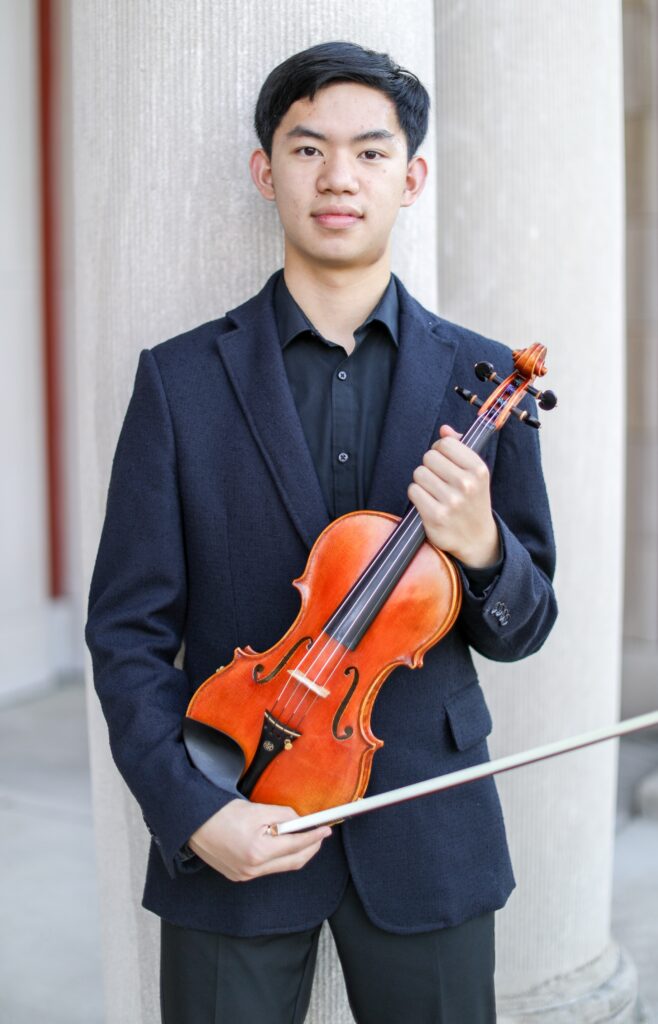
Calvin Chang, 17, has studied violin since age 5, currently studying with John Kim. He has received top prizes and recognition from competitions such as the Virtuoso Artists Festival, Bach Festival, Russian Chamber Music Festival of Seattle, and Washington MTNA. He was a concerto finalist in the Seattle Young Artists Music Festival and Performing Arts Festival of the Eastside, where he won 1st place in both the Solo and Concerto divisions and the adjudicator’s choice award. He has performed with the Seattle Youth Symphony Orchestra and Seattle Symphony and was a member of the Seattle Chamber Music Society Academy, having been featured in their showcase concerts. Calvin studied at the Meadowmount School of Music in 2022, the Bowdoin International Music Festival in 2024, and the Green Mountain Chamber Music Festival in 2025. He has performed in classes for musicians such as James Ehnes, Ann Setzer, Kurt Sassmannshaus, Keng-Yuen Tseng, Mimi Zweig, Inon Barnatan, Adam Neiman, Jonathan Swensen, and Orion Weiss, and for members of ensembles such as the Pacifica Quartet and the Balourdet Quartet.
Chris Minghao Jin, cello
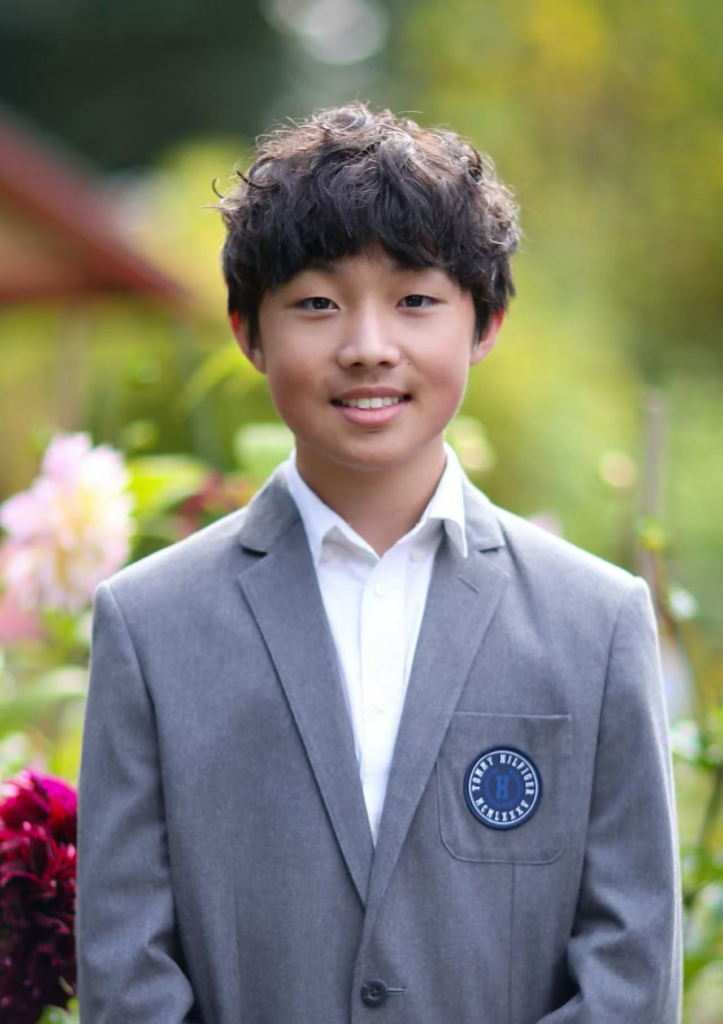
Chris Minghao Jin is a dedicated cellist currently studying at Interlake High School. He began his musical journey at age seven with piano before discovering his passion for the cello a year later. Since then, he has grown into an accomplished young musician, earning top honors in competitions such as PAFE, the Russian Chamber Music Foundation of Seattle Competition, and the Virtuoso Artists Festival. Chris has performed with his school orchestra at the 2024 Vancouver WorldStrides Festival, where he received the Maestro Award for his solo performance. Additionally, he performed as the principal cellist and soloist at the 2025 WMEA All-State Conference. A member of the Seattle Youth Symphony Orchestra (SYSO) since 2018, he now performs with the Youth Symphony Orchestra, where he continues to refine his artistry and musicianship. Outside of music, Chris enjoys playing tennis, spending time with friends, playing video games, and being with his family, including his cat, Kiwi.
Brian Kim, clarinet
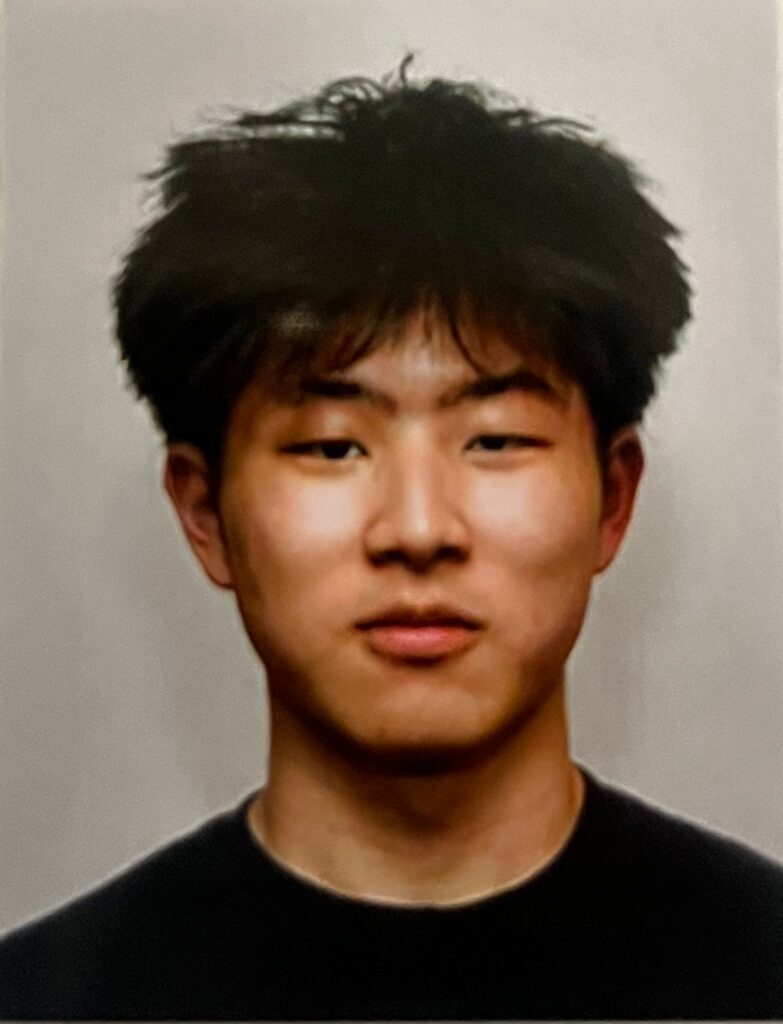
Brian Kim is an 18-year-old clarinetist who first picked up the instrument back in 5th grade and hasn’t looked back since. His love for music keeps growing, and he’s determined to turn that passion into a career after college. Brian finds a real sense of connection
playing with others, especially as part of the Evergreen Philharmonic, where he feels most at home. Outside of rehearsals, he enjoys producing his own music, experimenting with sounds and creating something entirely his own. Recently, Brian was accepted to the prestigious Berklee College of Music, an exciting milestone that brings him one step closer to turning his lifelong passion into a professional career. Whether he’s on stage or behind
a computer, music is always at the center of what he does.
Yeonu Kim, double bass
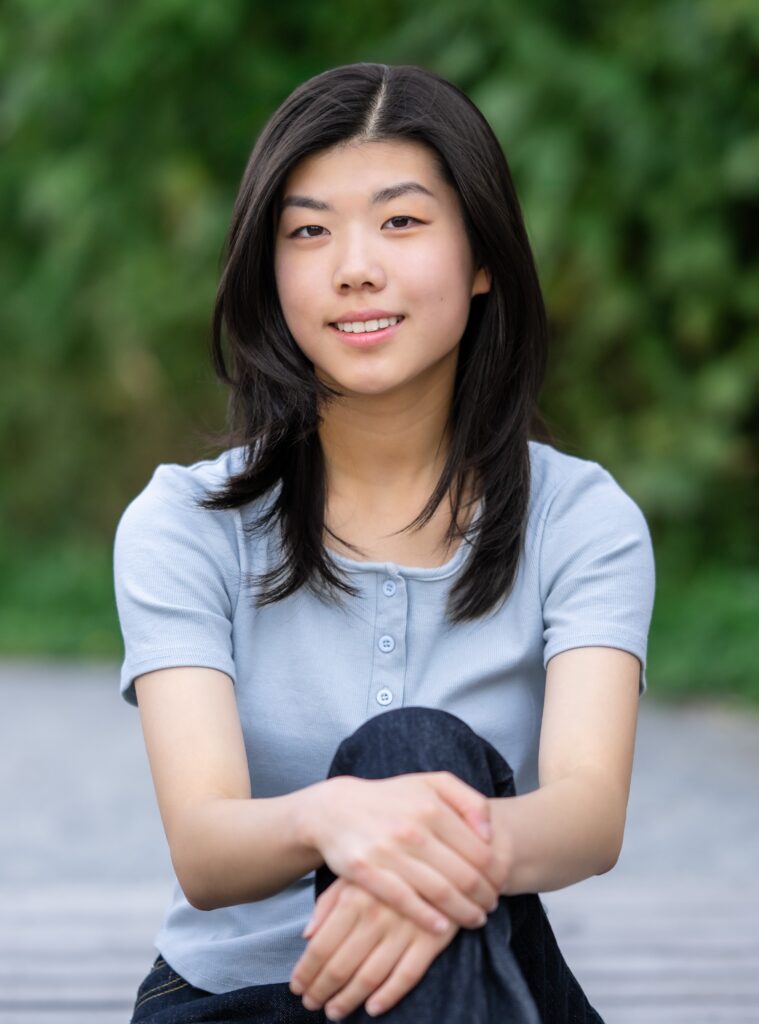
Yeonu Kim is a senior at Issaquah High School. She started playing the double bass in 7th grade and has been studying with Ramon Salumbides. Yeonu has been a dedicated bassist in the Evergreen Philharmonic since her freshman year. She qualified for the WMEA State Solo and Ensemble contest consecutively in 2024 and 2025, notably earning first place at the regional level in 2025. Beyond her own performances, she has been serving as a co-manager in her school district’s middle school honors orchestra, fostering the growth of younger musicians through leadership and mentorship. In her spare time, Yeonu enjoys playing tennis and listening to music. She plans to continue her orchestral journey in college.
Von Sandeno, percussion
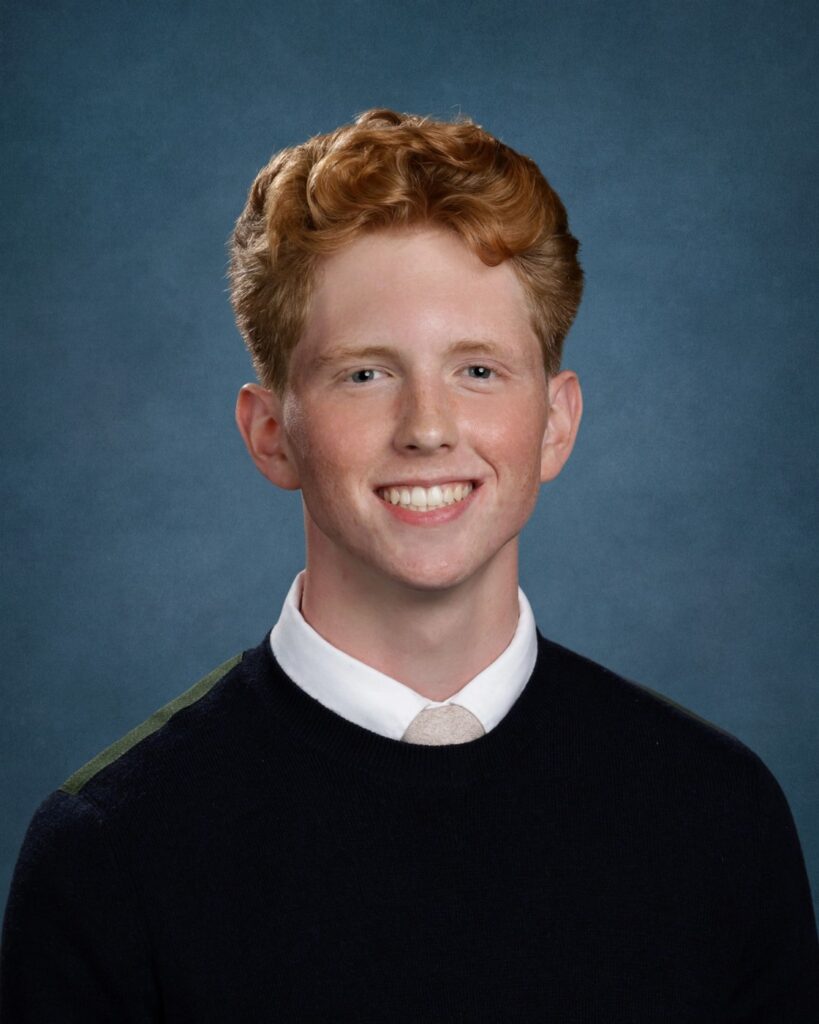
Von Sandeno is a senior at Providence Classical Christian School in Bothell. He started playing the drum set in 4th grade and has since enjoyed the company of various high-level musicians in jazz, concert band, choral accompaniment, and contemporary settings. He studied with the late great Garey Williams, and is currently most inspired by Nate Smith’s pocket drumming.
Von was selected as the WMEA Junior All-State jazz drummer in 2022. He regularly serves on his church worship team at Trinity Church Seattle, playing on Sundays as well as composing original music and tracking drums for live recordings. Von plays at school and private events with his jazz combo, “Minus One.”
When he’s not playing the drums, Von enjoys honing his music production skills and snowboarding. Von will continue his musical development at Covenant College.
Juliana Zheng, oboe
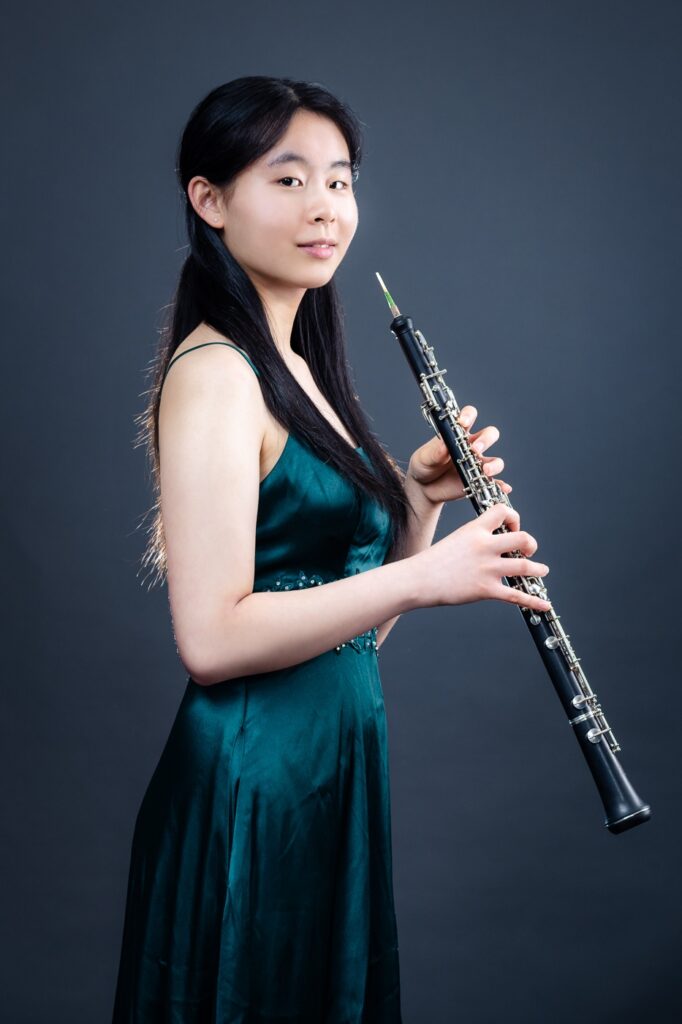
Juliana Zheng is a seventeen year old oboist from Interlake High School who currently studies under Mary Lynch VanderKolk. This is her fifth year playing in the Seattle Youth Symphony Orchestra where she currently plays as Principal Oboist. She has also been involved with regional music programs such as playing Principal Oboist in the 2025 All-Northwest Orchestra and winning first place in the 2025 state Solo and Ensemble competition. Over the summers, Juliana has also enjoyed attending summer festivals such as Kinhaven, Interlochen, Boston University Tanglewood Institute, and most recently, the National Youth Orchestra. In her free time, Juliana can be found in bookstores, cafés, or walking her dog around the city.